
High Altitude Guidance for Ladakh: Everything You Should Know Before Travelling to the Himalayas
High Altitude Guidance for Ladakh
An essential travel and safety guide by Aquafire Adventure Ladakh.
Ladakh is a beautiful high-altitude destination, but your body needs time to adjust to the thinner air. Before exploring Leh, Nubra Valley, Pangong Tso or riding across the mountain passes, understand altitude sickness, acclimatisation, and essential safety precautions.

There is something special about arriving in Ladakh. The landscape changes dramatically as you approach Leh. The mountains become larger, the valleys wider and the air noticeably different. For many travellers, it is their first experience of being surrounded by mountains rising above 5,000 metres.
Ladakh is a beautiful destination, but it is also a place where altitude deserves respect. Travellers often arrive excited to explore every corner of the region, sometimes forgetting that their bodies need time to adjust to the environment.
Whether you are visiting Ladakh for the first time, travelling with family, planning a road trip or joining a motorcycle expedition, understanding high altitude is one of the most important parts of preparing for your journey.
This guide explains what happens to your body at high altitude, how to recognise altitude sickness, why acclimatization matters and what you should do to travel safely in Ladakh.
In This Guide.
Understanding the Altitude of Ladakh
What Is Acute Mountain Sickness (AMS)?
Why Acclimatisation in Leh Is So Important
Important Precautions Before Starting Your Ladakh Journey
High Altitude Safety During Motorcycle Expeditions
Recognising Serious Altitude Sickness: HAPE and HACE
What Should You Carry for a High-Altitude Trip to Ladakh?
Can You Take Medicines to Prevent Altitude Sickness?
Is Ladakh Safe for First-Time Visitors?
A Few Words Before You Begin Your Ladakh Adventure
Understanding the Altitude of Ladakh
Understanding the Altitude of Ladakh
One of the first things travellers should understand is that Ladakh is not an ordinary mountain destination. Much of the region lies above 3,000 metres, and several popular tourist destinations are situated considerably higher.
At these elevations, atmospheric pressure is lower. Although the percentage of oxygen in the air remains approximately the same, the pressure driving oxygen into your bloodstream is reduced. This means your body has to work harder to supply oxygen to its tissues.
You may notice that walking up a flight of stairs makes you breathe faster than usual. Even a short walk with luggage can feel more tiring than it would at home. This is particularly noticeable during the first couple of days.
Here are the approximate elevations of some popular destinations:
Approximate Altitudes of Popular Ladakh Destinations
| Destination | Approximate altitude |
|---|---|
| Leh | 3,500 metres |
| Nubra Valley | 3,000–3,200 metres |
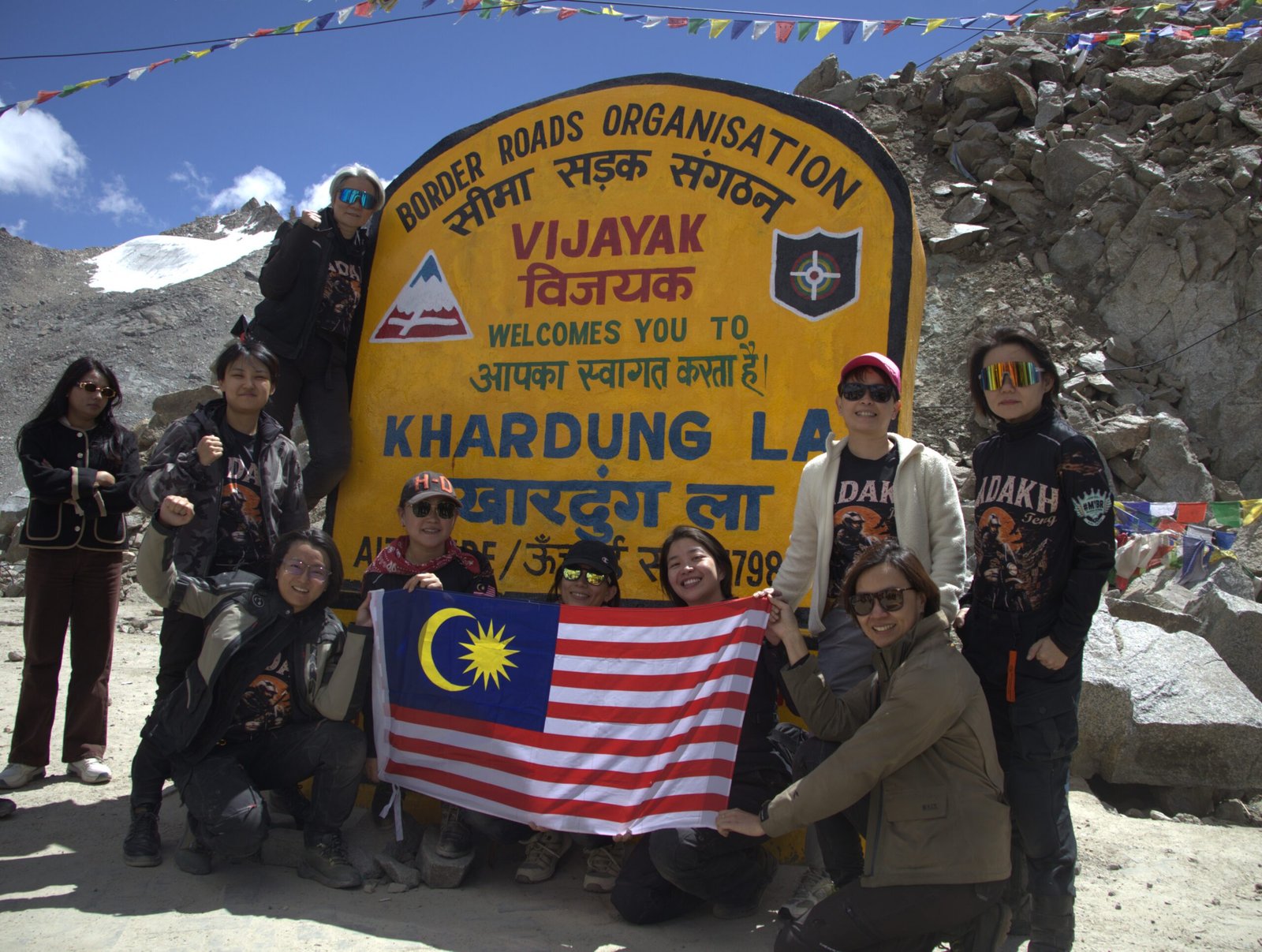
| Khardung La | 5,359 metres |
| Pangong Tso | 4,225 metres |
| Hanle | 4,500 metres |
| Chang La | 5,360 metres |
Major High Mountain Passes in Ladakh
Ladakh is home to some of the highest mountain passes in the world. These passes connect remote valleys, high-altitude villages and some of the most spectacular landscapes in the Himalayas.
During a Ladakh road trip or motorcycle expedition, travellers may cross several of these challenging mountain passes. Their elevations can exceed 5,000 metres above sea level.
Important Mountain Passes and Their Approximate Elevations
Mig La – 5,913 metres
Umling La – 5,798 metres
Khardung La – 5,359 metres
Chang La – 5,360 metres
Tanglang La – 5,328 metres
Wari La – 5,250 metres
Lachulung La – 5,059 metres
Baralacha La – 4,890 metres
Nakee La – 4,750 metres
Fotu La – 4,108 metres
Namika La – 3,700 metres
Zoji La – 3,528 metres
Travelling across these high mountain passes requires proper acclimatisation and preparation. Weather conditions can change quickly, and altitude-related symptoms should never be ignored. Allow your body sufficient time to adjust before attempting high-altitude journeys.
2. What Is Acute Mountain Sickness (AMS)?
Acute Mountain Sickness, commonly called AMS, is one of the most common health concerns for people travelling to high-altitude destinations such as Ladakh.
It happens when the body has not adjusted properly to the reduced oxygen pressure at higher elevations. Symptoms can develop after arriving at altitude or after climbing to a higher location too quickly.
Many travellers initially mistake the symptoms for tiredness caused by travelling, lack of sleep or dehydration. This is why it is important to understand what altitude sickness actually feels like.
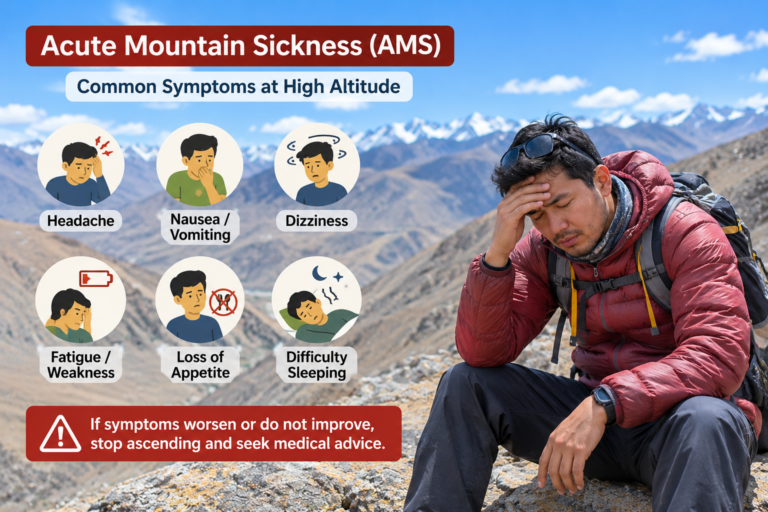
Common Symptoms of Acute Mountain Sickness
The most common symptoms include:
Headache, which may become worse with activity.
Nausea or an uncomfortable feeling in the stomach.
Dizziness or light-headedness.
Unusual tiredness, even after resting.
Loss of appetite.
Difficulty sleeping.
Not everyone experiences the same symptoms. Some people may have only a headache, while others may experience several symptoms together.
A common mistake is to assume that a headache is normal because of the cold weather or a long journey. A headache accompanied by nausea, dizziness or unusual fatigue after gaining altitude should be taken seriously.
Can Anyone Get Altitude Sickness?
Yes. Altitude sickness does not depend entirely on your age, physical fitness or previous travel experience.
You may be a regular gym-goer, an experienced trekker or someone who has travelled to the mountains many times. None of these things guarantees protection against AMS.
Your body’s response to altitude is individual, and even people travelling together can experience very different symptoms.
If you begin experiencing symptoms, do not continue climbing to a higher altitude. Stop, rest and seek medical advice. If symptoms worsen or do not improve, descent is important.
3.Why Acclimatization in Leh Is So Important
If there is one piece of advice we would give every first-time visitor to Ladakh, it would be this: do not underestimate the importance of acclimatization.
Most travellers arriving by flight land directly in Leh, which is already approximately 3,500 metres above sea level. This is a significant change for someone coming from a city situated close to sea level.
Your body cannot adjust to this change immediately. It needs time to respond to the lower oxygen pressure.
This process is called acclimatisation. During acclimatisation, your body gradually makes adjustments that improve its ability to function in an environment with reduced oxygen availability.
The first 48 hours after arriving in Leh are particularly important. The Leh district administration has advised visitors to allow at least 48 hours for initial acclimatisation before travelling to higher-altitude destinations.
What Should You Do After Arriving in Leh?
Day 1 – Arrival and Complete Rest
After reaching Leh, avoid making ambitious sightseeing plans. Check into your hotel or accommodation, have a comfortable meal and allow yourself time to rest.
You may feel energetic immediately after arriving, but that does not mean your body has adjusted to the altitude.
Avoid unnecessary walking, running, heavy exercise or carrying heavy luggage. Do not plan a same-day trip to Khardung La or other high mountain passes.
Day 2 – Gentle Activity
If you are feeling well, you can start with gentle activities around Leh.
A short walk, sitting outdoors or visiting a nearby place at a similar altitude may be suitable, provided you remain symptom-free.
Continue to avoid strenuous activities. Pay attention to how your body responds rather than following a fixed sightseeing schedule.
Day 3 Onwards – Gradual Exploration
If you have completed the initial acclimatization period and are feeling well, you can consider beginning your journey towards other destinations.
However, 48 hours is not a guarantee that everyone is fully acclimatized. Your health, previous altitude exposure and planned sleeping elevations all matter.
If you develop symptoms of altitude sickness, do not continue ascending simply because your itinerary says it is time to leave.
An Important Point for Travellers Arriving by Road
Some visitors travel to Leh from Srinagar or Manali rather than flying directly into the city. The journey itself involves changes in elevation, and the effects depend on the route and overnight stops.
Travelling by road does not automatically eliminate the risk of altitude sickness. A gradual itinerary with appropriate overnight stops is still important.
4. Important Precautions Before Starting Your Ladakh Journey
Preparing for Ladakh is not just about buying warm clothes and booking accommodation. It also means understanding how to look after yourself in a high-altitude environment.
A few simple habits can make your journey more comfortable.
Stay Properly Hydrated
The air in Ladakh is generally dry, and many visitors notice that they feel thirsty more frequently. Drink water regularly throughout the day.
There is no need to force yourself to drink excessive amounts of water. Simply maintain normal hydration and pay attention to your body’s needs.
Avoid Alcohol During Initial Acclimatization
Many travellers look forward to relaxing with a drink after reaching Leh. However, alcohol can interfere with sleep, contribute to dehydration and make it harder to recognise symptoms of altitude illness.
It is better to avoid alcohol during the initial acclimatization period.
Eat Regular and Nutritious Meals
Travelling at altitude can affect your appetite. Some visitors feel less hungry than usual, especially during the first couple of days.
Try to eat regular meals and choose foods that are comfortable for your stomach. Avoid overeating immediately after arrival.
Avoid Unnecessary Physical Exertion
Do not test your fitness by climbing steep roads or going for long walks immediately after reaching Leh.
Even simple activities can feel more demanding at high altitude. Give yourself time to adjust.
Protect Yourself from the Sun
The sunlight can feel particularly strong in Ladakh, even when the surrounding air is cold.
Use sunscreen, wear UV-protection sunglasses and protect exposed skin. A hat or cap can also help.
Get Proper Sleep
A change in altitude can affect sleeping patterns. Some visitors experience disturbed sleep during their first nights in Leh.
Allow enough time for rest and avoid strenuous activities late in the day.
5. High Altitude Safety During Motorcycle Expeditions
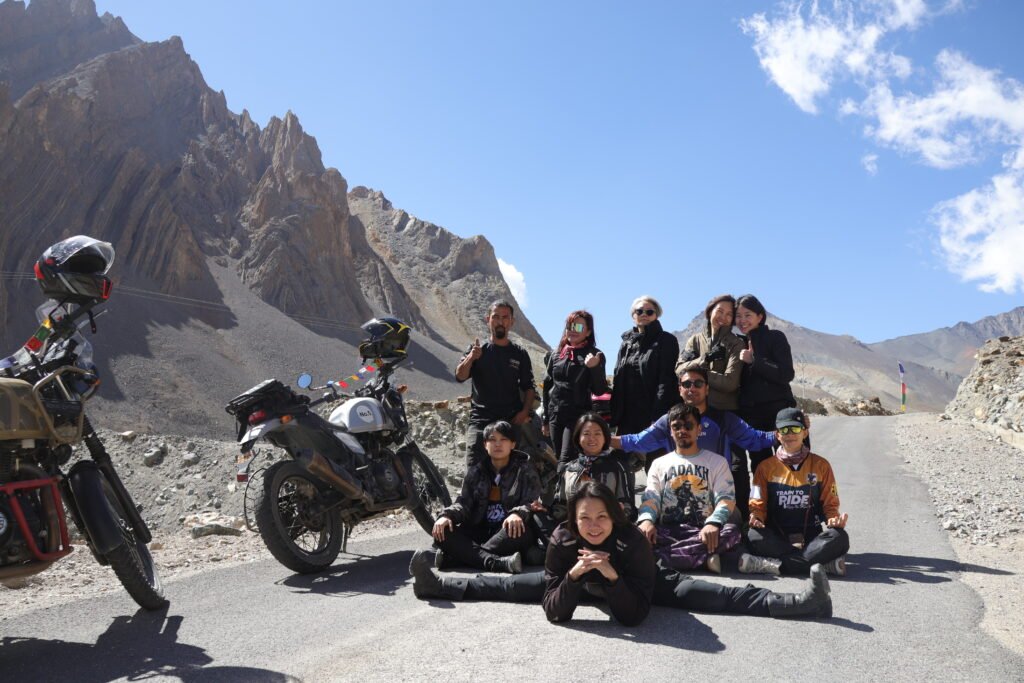
For many visitors, riding a motorcycle through Ladakh is the highlight of the entire trip. The open mountain roads, winding passes, river valleys and spectacular landscapes make the region one of India’s most memorable motorcycle destinations.
However, riding at high altitude is different from riding on ordinary roads.
A motorcycle expedition can involve several hours of riding, changing weather conditions, rough road surfaces and repeated climbs to elevations above 4,000 or even 5,000 metres.
This combination requires preparation and a responsible approach.
Do Not Rush Towards the Mountain Passes
A common mistake is trying to cover too many destinations in a short period.
For example, after arriving in Leh, some riders immediately want to cross Khardung La or Chang La. These passes are beautiful, but the altitude is significantly higher than Leh.
Complete your initial acclimatization before planning such rides, and avoid ascending if you have symptoms of altitude sickness.
Take Breaks During Long Rides
Long hours on a motorcycle can cause fatigue, particularly when combined with cold temperatures and high altitude.
Take regular breaks, eat properly and avoid unnecessary physical exertion during stops.
If you feel unusually tired, dizzy or unwell, inform your tour leader rather than trying to keep up with the group.
Dress Appropriately
Weather conditions can change quickly in the mountains. A sunny morning in Leh can turn into a cold and windy afternoon at a high mountain pass.
Carry proper riding jackets, thermal layers, gloves, waterproof protection and suitable footwear.
Do Not Ignore Unusual Symptoms
This is particularly important during group motorcycle expeditions. Riders sometimes hesitate to report discomfort because they do not want to delay the group.
That should never be the case.
Your health is more important than completing a particular route on schedule. If you experience symptoms of altitude sickness, stop ascending and seek medical assessment. Do not continue riding if you are dizzy, confused or severely unwell.
A responsible motorcycle expedition is not about reaching every destination as quickly as possible. It is about enjoying the journey while making sensible decisions along the way.
6. Recognising Serious Altitude Sickness: HAPE and HACE
Although many travellers experience only mild altitude-related symptoms, altitude illness can sometimes become serious and even life-threatening.
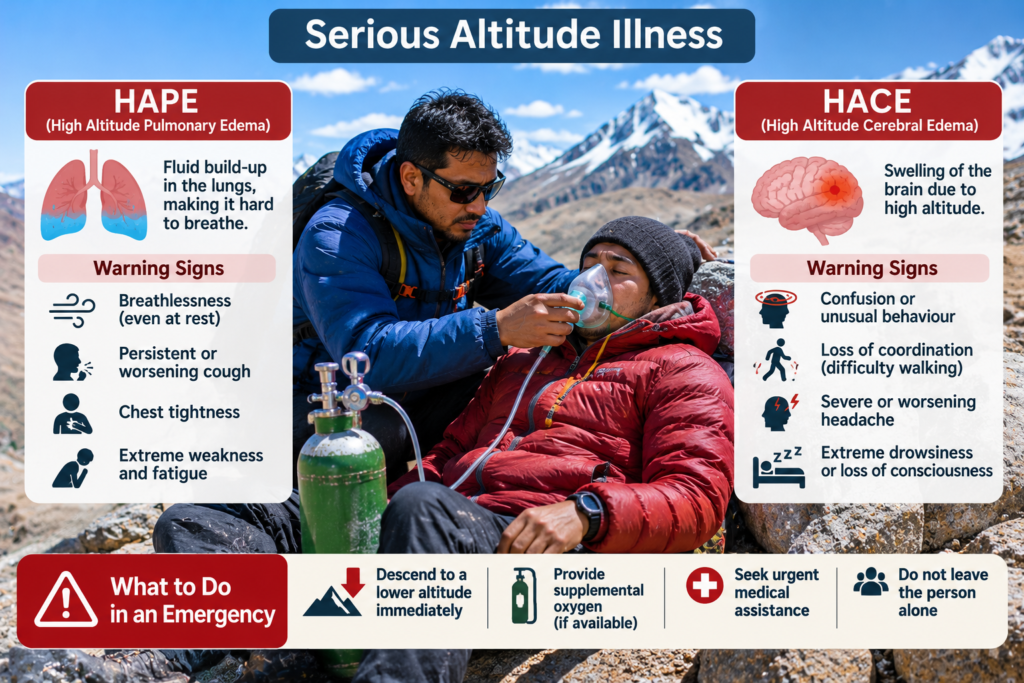
Two conditions that every visitor to Ladakh should know about are High Altitude Pulmonary Edema (HAPE) and High Altitude Cerebral Edema (HACE).
High Altitude Pulmonary Edema (HAPE)
HAPE occurs when fluid accumulates in the lungs, making it difficult for the body to obtain sufficient oxygen.
Some warning signs include:
Breathlessness even while resting.
A persistent or worsening cough.
Unusual chest tightness.
Difficulty walking due to breathlessness.
Severe weakness.
Sometimes, frothy or blood-tinged sputum.
A person with HAPE may initially appear simply exhausted. However, breathlessness at rest or a worsening cough at altitude should never be ignored.
High Altitude Cerebral Edema (HACE)
HACE is a severe form of altitude illness involving swelling of the brain.
Warning signs include:
Confusion or unusual behaviour.
Difficulty walking in a straight line.
Loss of coordination.
Severe or worsening headache.
Extreme drowsiness.
Altered consciousness.
A person who suddenly becomes confused, behaves unusually or cannot walk properly at high altitude needs emergency medical assistance.
What Should You Do in an Emergency?
If HAPE or HACE is suspected, treat it as a medical emergency.
The affected person needs immediate descent to a lower altitude and urgent medical assistance. Supplemental oxygen should be provided when available, but must not delay descent or evacuation.
Do not leave the affected person alone, and do not allow them to continue travelling to a higher destination.
Remember that serious altitude illness can develop even in people who appeared healthy earlier in their journey.
Never take chances with symptoms involving breathing difficulties, confusion or loss of coordination.
What Should You Carry for a High-Altitude Trip to Ladakh?
What Should You Carry for a High-Altitude Trip to Ladakh?
Packing for Ladakh requires a little more thought than packing for an ordinary holiday.
The weather can vary considerably between destinations, and a journey that starts in relatively comfortable conditions in Leh may take you to a cold, windy mountain pass within a few hours.
Here are some useful items to carry:
Personal Medicines
Carry any prescription medicines you regularly take. Do not depend on finding your particular medication in a remote village.
First-Aid Kit.
Basic first-aid supplies are useful for minor cuts, blisters and other common travel problems.
Sunscreen and Sunglasses
Strong sunlight and ultraviolet exposure are common concerns at high elevations. Carry sunscreen and good-quality UV-protection sunglasses to protect your skin and eyes during your journey.
Warm Clothing
Pack thermal innerwear, fleece layers, a warm jacket, gloves, socks and a cap. Temperatures can drop significantly at higher elevations, particularly during early mornings and evenings.
Personal Medical Information
Oral Rehydration Salts (ORS)
Oral rehydration salts can be useful when appropriate for fluid replacement, particularly during episodes of fluid loss. Carry ORS sachets and prepare them according to the instructions on the packet.
Mobile Phone and Power Bank
Mobile connectivity can be limited in remote areas, so keep your devices charged and share your itinerary with someone you trust. Carry a fully charged power bank to help keep your phone available during long road journeys.
Should You Carry a Pulse Oximeter?
Some travellers prefer carrying a pulse oximeter to measure oxygen saturation.
It can provide additional information, but readings at high altitude can vary and should not be used on their own to diagnose or rule out altitude sickness.
A normal-looking reading does not mean you can ignore symptoms.
8. Can You Take Medicines to Prevent Altitude Sickness?
Some travellers ask whether they should take medication before arriving in Ladakh.
Acetazolamide, commonly known by the brand name Diamox, is sometimes prescribed to help prevent acute mountain sickness. It can be useful for travellers who have an increased risk of altitude illness, depending on their travel itinerary and medical history.
Consult a Doctor Before Taking Altitude Medication
However, medication is not a substitute for proper acclimatization.
You should consult a qualified medical professional before travelling to discuss whether preventive medication is appropriate for you. Your doctor can also explain the correct timing, dosage, contraindications and possible side effects.
Do not start taking Diamox simply because someone else in your group is using it.
If you have a medical condition, take regular medication or have experienced altitude sickness before, discuss your travel plans with your doctor well in advance.
9. Is Ladakh Safe for First-Time Visitors?
This is probably one of the most common questions asked by people planning their first trip to Ladakh.
The answer is yes, Ladakh can be a wonderful destination for first-time visitors, provided the journey is planned sensibly.
You do not need to be a professional mountaineer or an experienced adventure rider to enjoy the region. Many families, couples, solo travellers and groups visit Ladakh every year.
What matters is understanding the environment you are travelling into.
Do not try to cover every destination in a few days. Allow sufficient time in Leh, plan your overnight stops carefully and avoid rushing between high-altitude locations.
It is also worth remembering that the journey does not always go exactly according to plan. Weather, road conditions and health-related concerns may require changes to your itinerary.
Being flexible is part of travelling in the Himalayas.
The best Ladakh trip is not necessarily the one that covers the most kilometres. It is the one where you have enough time to enjoy the landscapes, experience the local culture and return home with good memories.
10. A Few Words Before You Begin Your Ladakh Adventure
Ladakh is a destination that deserves to be explored at its own pace. From the beautiful monasteries around Leh to the dramatic landscapes of Nubra Valley, the blue waters of Pangong Tso and the remote villages of Hanle and Zanskar, every journey offers something different.
But the mountains also remind us that adventure comes with responsibility.
At Aquafire Adventure Ladakh, we believe that proper planning, local knowledge and respect for the environment are essential parts of every Himalayan expedition.
Whether you are joining us for a Royal Enfield motorcycle tour, planning a customised road trip or exploring Ladakh with family and friends, we encourage you to prepare well and listen to your body throughout the journey.
Take your time, respect the altitude and enjoy the experience.
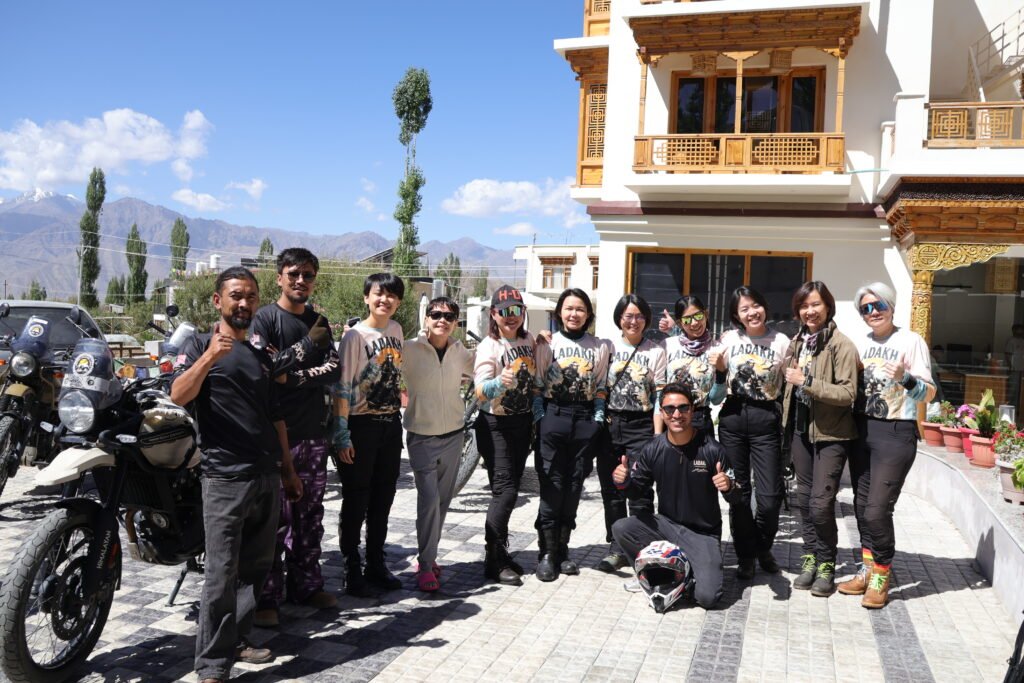
Explore Ladakh. Respect the Mountains. Travel Safely.

Recent Posts
High Altitude Guidance for Ladakh: Everything You Should Know Before Travelling to the Himalayas

Leh Ladakh Bike Trip Guide: Top Packages and Rentals with Aquafire Adventure
