

- Home
- Festivals of Ladakh
Festivals of Ladakh
Festivals as the Soul of Ladakh
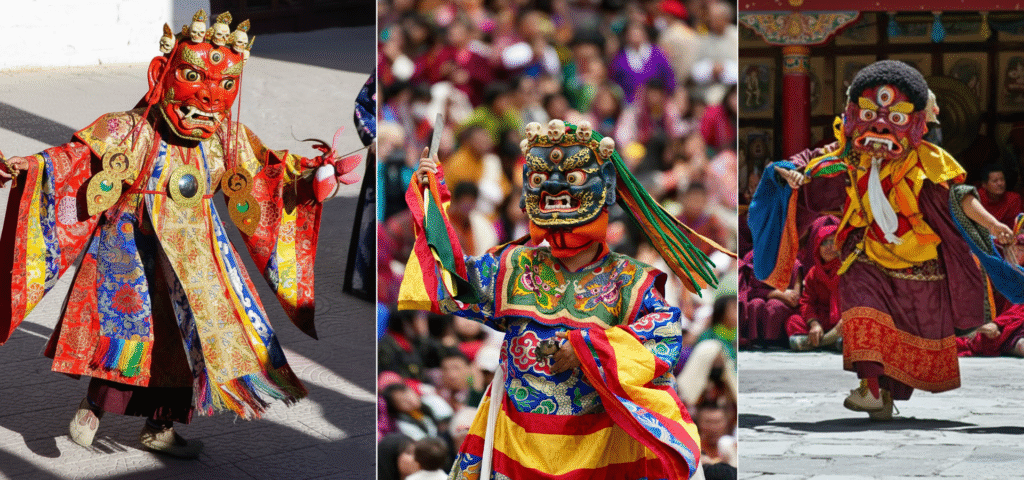
High in the Himalayas, where mountains rise like silent guardians and time seems to move more slowly, festivals are not just events in Ladakh, they are life itself.
In Ladakh, festivals mark the rhythm of the year. They signal the changing seasons, protect villages from misfortune, celebrate harvests, honor enlightened masters, and bring scattered communities together after long, isolated winters. Long before tourism arrived, these festivals were the spiritual and social backbone of Ladakhi society.
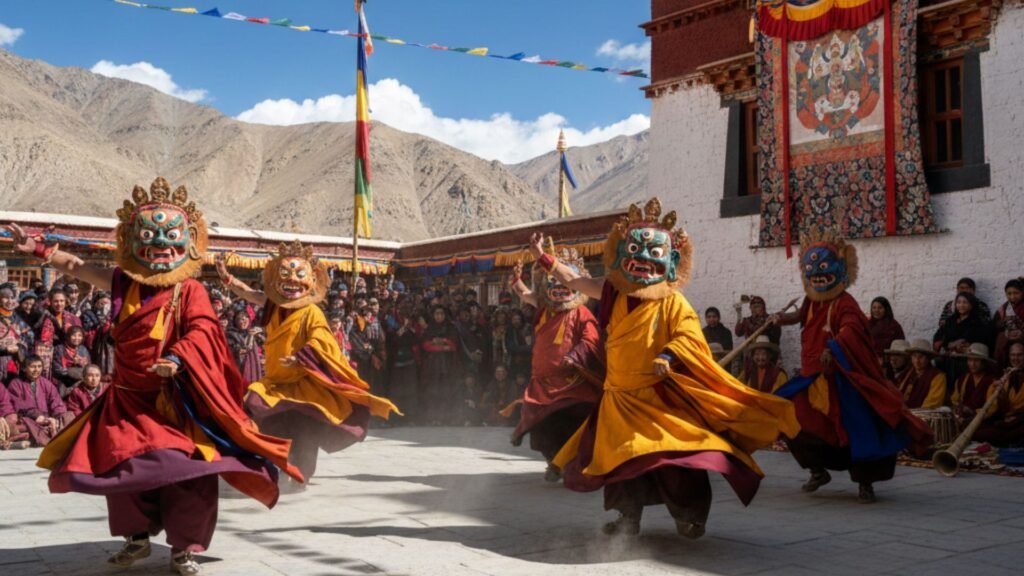
Most Ladakh festivals are rooted in Tibetan Buddhism, especially the traditions preserved inside ancient monasteries. Monks perform Cham dances—sacred masked rituals believed to destroy negative forces and restore balance. Every movement, costume, drumbeat, and chant carries symbolic meaning passed down through centuries.
Unlike modern stage performances, these celebrations are living rituals. Villagers gather in monastery courtyards, elders whisper old stories, prayer flags flutter in the wind, and butter lamps glow against stone walls. Festivals are timed according to the Tibetan lunar calendar, which means their dates shift each year—adding to their mystical quality.
For travelers, Ladakh’s festivals offer something rare:
- A chance to witness ancient traditions exactly where they were born
- A deeper understanding of Ladakhi faith, values, and resilience
- An experience that goes far beyond sightseeing or photography
From grand celebrations like Hemis Tsechu to remote village festivals near high-altitude lakes, each festival reveals a different layer of Ladakh’s soul quiet, powerful, and timeless.
In the sections ahead, you’ll find a complete, festival-by-festival guide to Ladakh’s celebrations explaining what they mean, when they happen, where to see them, and how to experience them respectfully.
This is not just a list of dates.
It’s a journey into the heart of Ladakh.
| Ladakh Festivals | Year 2026 | Year 2027 | Location |
|---|---|---|---|
|
Spituk Gustor |
16-17 Janurary |
05-06 Janurary |
Spituk Monastery |
|
Dosmochey |
15-16 February |
04-05 February |
Leh, Likir, Diskit |
|
Stok Guru Tsechu |
25-26 Februray
|
15-16 Februray |
Stok Palace |
|
Matho Nagrang |
02-03 March |
19-20 Februray |
Matho Monastery |
|
Shey Doo Lhoo |
18 March |
08 March |
Shey Monastery |
|
Saka Dawa |
31 May |
18 June |
All Ladakh |
|
Sindhu Darshan |
June
|
June |
Near Shey village |
|
Yuru Kabgyat |
13-14 June |
01-02 July |
Lamayuru Monastery |
|
Hemis Tsechu |
24-25 June |
13-14 July |
Hemis Monastery |
|
Shachukul Kabgyat |
02-03 July |
20-21 July |
Shachukul Monastery |
|
Stongde Gustor |
03-04 July |
21-22 July |
Stongde Monastery |
|
Phyang Tserup |
12-13 July |
31-01 August |
Phyang Monastery |
|
Karsha Gustor |
12-13 July |
31-01 August |
Karsha Monastery, Zanskar |
|
Korzok Gustor |
17-18 July |
06-07 August |
Korzok Monastery |
|
Takthok Tsechu |
24-25 July |
11-12 August |
Takthok Monastery |
|
Sani Naro Nasjal |
28-29 July |
16-17 August |
Sani Monastery, Zanskar |
|
Ladakh Festival |
21-24 September |
21-24 September |
Leh Town |
|
Diskit Gustor |
08-09 October |
27-28 October |
Diskit Monastery |
|
Thiksey Gustor |
28-29 October |
16-17 November |
Thiksey Monastery |
|
Chemrey Wangchok |
07-08 November |
26-27 November |
Chemrey Monastery |
|
Galdan Namchot |
03 December |
22 December |
All over Ladakh |
|
Ladakhi Losar (New Year) |
09 December |
28 December |
All over Ladakh |
Spituk Gustor Festival
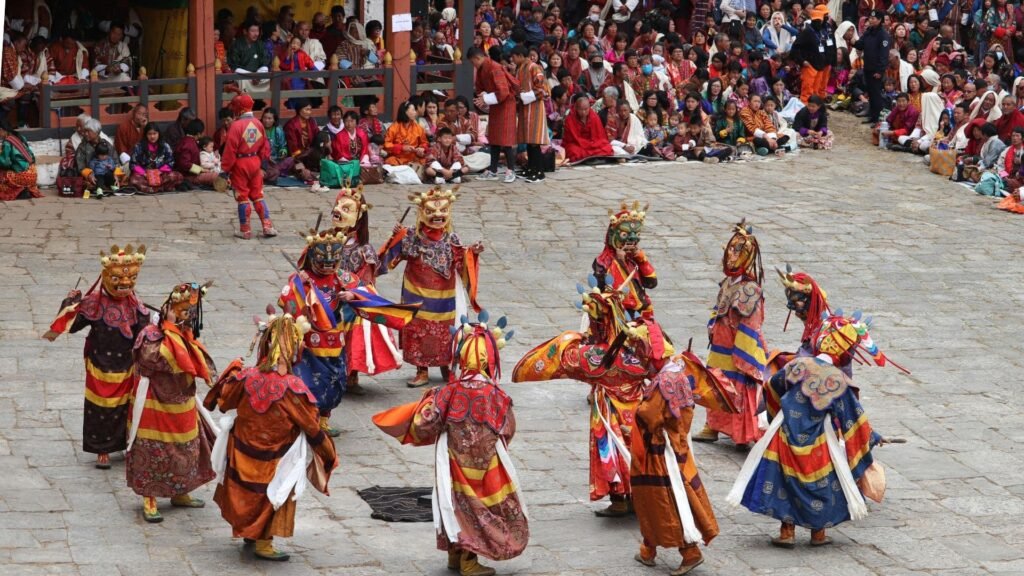
The Spituk Gustor Festival is celebrated at Spituk Monastery, located about 8 km from Leh in Ladakh, and is one of the most important winter monastery festivals of the region. The main highlights include sacred Cham masked dances performed by monks to subdue negative forces, powerful ritual music with drums and long horns, and the dramatic burning of a ritual effigy on the 29th day of the Tibetan lunar month, symbolizing the destruction of evil and misfortune before the New Year.
This festival is ideal for spiritual seekers, culture enthusiasts, photographers, and travelers who want to witness Ladakh’s traditions in their most authentic, less-commercialized form. Visitors should be prepared for extreme cold, dress in heavy winter clothing, maintain silence and respect during rituals, avoid intrusive photography, and plan short day visits from Leh due to icy conditions. What makes Spituk Gustor truly special is its raw winter setting, deep spiritual intensity, and ancient ritual purity, offering a rare glimpse into how Ladakh preserves spiritual balance through faith, symbolism, and centuries-old monastic traditions.
Dosmoche Festival

The Dosmoche Festival is one of the most important winter festivals of Ladakh, celebrated to ensure peace, prosperity, and protection from negative forces before the beginning of the Tibetan New Year. It is uniquely observed at multiple locations, mainly near Leh Palace, as well as at Diskit Monastery and Likir Monastery, making it a festival that unites different regions of Ladakh in a shared spiritual purpose.
The main highlights include the preparation of intricate Dosmo (thread-cross ritual structures) believed to trap harmful spirits, along with solemn Cham masked dances performed by monks to invoke protective deities and cleanse accumulated negativity from the land and its people. As chants, cymbals, drums, and long horns echo through monastery courtyards, the Dosmo is eventually dismantled or destroyed, symbolizing the complete removal of obstacles and misfortune. This festival is especially suited for spiritual seekers, culture enthusiasts, and serious photographers who wish to witness Ladakhi Buddhism in its most authentic and ritual-focused form, far removed from commercial celebrations.
Visitors should be prepared for harsh winter conditions, wear heavy thermal clothing, respect silence during prayers, seek permission before photography, and carefully plan travel to Nubra Valley due to snow-covered roads. What makes Dosmochey truly special is its emphasis on collective spiritual protection rather than spectacle, offering a rare and powerful insight into how Ladakh preserves harmony between humans, nature, and unseen forces through centuries-old Buddhist traditions.
Stok Guru Tsechu Festival
The Stok Guru Tsechu Festival is a deeply mystical winter festival of Ladakh, celebrated at Stok Monastery near the historic Stok Palace, and is closely associated with the royal heritage of Ladakh. The main highlights of the festival are the rare and intense oracle trance rituals, where monks known as Lha-mo enter deep spiritual possession to deliver prophecies, blessings, and warnings for the coming year, along with sacred Cham masked dances dedicated to Guru Padmasambhava (Guru Rinpoche).
This festival is especially suited for spiritual seekers, serious culture enthusiasts, and researchers of Himalayan Buddhism, as the oracle ceremonies are among the most powerful and least commercialized rituals in Ladakh. Visitors should be prepared for severe winter cold, maintain complete silence and respect during oracle sessions, avoid flash photography, and plan short visits from Leh due to icy road conditions.
What makes Stok Guru Tsechu truly special is its rare oracle tradition combined with royal patronage, offering an extraordinary glimpse into Ladakh’s living spiritual practices where prophecy, devotion, and ancient belief systems continue to guide community life even today.
Matho Nagrang Festival
The Matho Nagrang Festival is one of the most intense and spiritually significant winter festivals of Ladakh, celebrated at Matho Monastery, about 26 km from Leh. The main highlights of the festival are the extraordinary oracle trance rituals, during which two monks, known as Rongtsans, enter deep possession and deliver prophecies, predictions, and blessings for the coming year while performing astonishing physical feats believed to be divinely protected.
This festival is best suited for spiritual seekers, cultural explorers, and travelers interested in rare Himalayan rituals, as it offers a raw and authentic experience unlike any other Ladakh festival. Visitors should prepare for extreme winter weather, remain absolutely respectful and silent during oracle rituals, avoid intrusive photography, and plan travel carefully due to snow-covered roads.
What makes Matho Nagrang truly special is its unique oracle tradition found nowhere else in Ladakh, where faith, fearlessness, and devotion merge into a powerful living ritual that continues to guide local communities through ancient spiritual wisdom.
The Saka Dawa Festival
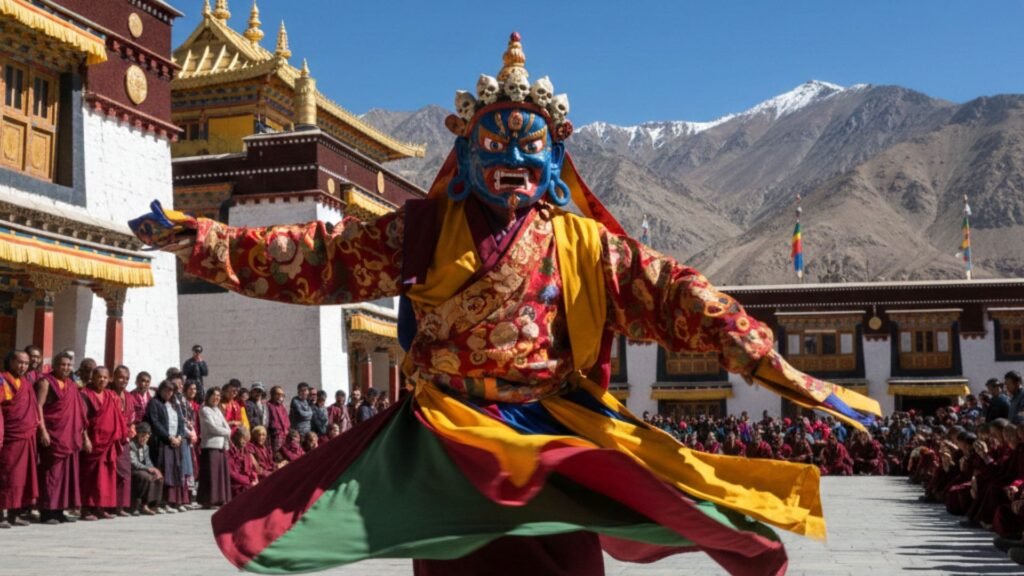
The Saka Dawa Festival, also known as Buddha Purnima or Vesak Day, is one of the most sacred Buddhist festivals celebrated across Ladakh, commemorating the birth, enlightenment, and parinirvana of Gautama Buddha.
In Ladakh, the festival is observed with deep devotion at major monasteries and in Leh town, where monks and laypeople participate in the Bhumskor procession, a ceremonial circumambulation of the town while chanting prayers and spinning prayer wheels. The main highlights include recitation of Buddhist scriptures, offering of butter lamps, acts of charity, and visits to monasteries to accumulate merit, reflecting the festival’s emphasis on compassion and mindfulness.
Saka Dawa is ideal for spiritual seekers, cultural travelers, and families, as it is peaceful, inclusive, and deeply meaningful without being physically demanding. Visitors are advised to dress modestly, maintain silence during prayers, avoid loud behavior, and respect the non-celebratory, meditative nature of the day. What makes Saka Dawa truly special is its universal spiritual message, reminding both locals and visitors that inner awakening, kindness, and ethical living are central to Buddhist life in Ladakh.
Sindhu Darshan Leh
The Sindhu Darshan Festival is a unique cultural and spiritual celebration of Ladakh, held on the banks of the Indus River near Leh to honor the river as a symbol of life, unity, and heritage. The main highlights of the festival include prayers and offerings to the river, cultural performances by artists from different parts of India, traditional music and dances, and ceremonial rituals that emphasize harmony between nature and humanity.
This festival is well suited for cultural travelers, families, and first-time visitors, as it combines spiritual reverence with accessible celebrations and public events. Visitors should be prepared for bright sun and cool winds, carry sun protection, respect ceremonial spaces near the river, and follow local guidance during rituals. What makes Sindhu Darshan special is its message of cultural unity and ecological respect, celebrating the Indus not only as a geographical landmark but as a timeless lifeline that connects civilizations, faiths, and generations in Ladakh.
Yuru Kabgyat Festival
The Yuru Kabgyat Festival is an important monastic festival of Ladakh, celebrated at the ancient Lamayuru Monastery, one of the oldest and most dramatic monasteries in the region.
The main highlights of the festival are the vibrant Cham masked dances performed by monks, which depict the victory of good over evil and are believed to remove negative forces while bringing peace and prosperity to the community, accompanied by traditional music using drums, cymbals, and long horns. This festival is ideal for cultural explorers, spiritual travelers, and photographers, as it offers a visually striking experience set against Lamayuru’s moonlike landscape while remaining less crowded than major summer festivals.
Visitors should dress modestly, follow monastery etiquette, avoid interrupting rituals, and plan travel in advance as Lamayuru lies about 125 km from Leh. What makes Yuru Kabgyat truly special is its combination of sacred ritual and breathtaking setting, where ancient Buddhist traditions unfold in one of Ladakh’s most atmospheric and historically significant monasteries.
Hemis Tsechu Festival
The Hemis Tsechu Festival is the largest and most celebrated monastery festival of Ladakh, held at the iconic Hemis Monastery, about 45 km from Leh, to commemorate the birth anniversary of Guru Padmasambhava (Guru Rinpoche), the founder of Tibetan Buddhism. The main highlights of the festival include spectacular Cham masked dances performed by monks in richly embroidered costumes, ritual music with drums and long horns, and the display of sacred Buddhist symbols that represent the triumph of good over evil and ignorance.
This festival is ideal for first-time visitors, culture enthusiasts, photographers, and families, as it combines deep spiritual meaning with a vibrant, celebratory atmosphere and excellent accessibility. Visitors should arrive early to secure good viewing spots, dress respectfully, stay hydrated due to high altitude, and be mindful of photography etiquette during rituals. What makes Hemis Tsechu truly special is its grand scale, centuries-old tradition, and powerful spiritual energy, making it the most immersive and visually captivating festival experience in Ladakh.
Shachukul Kabgyat
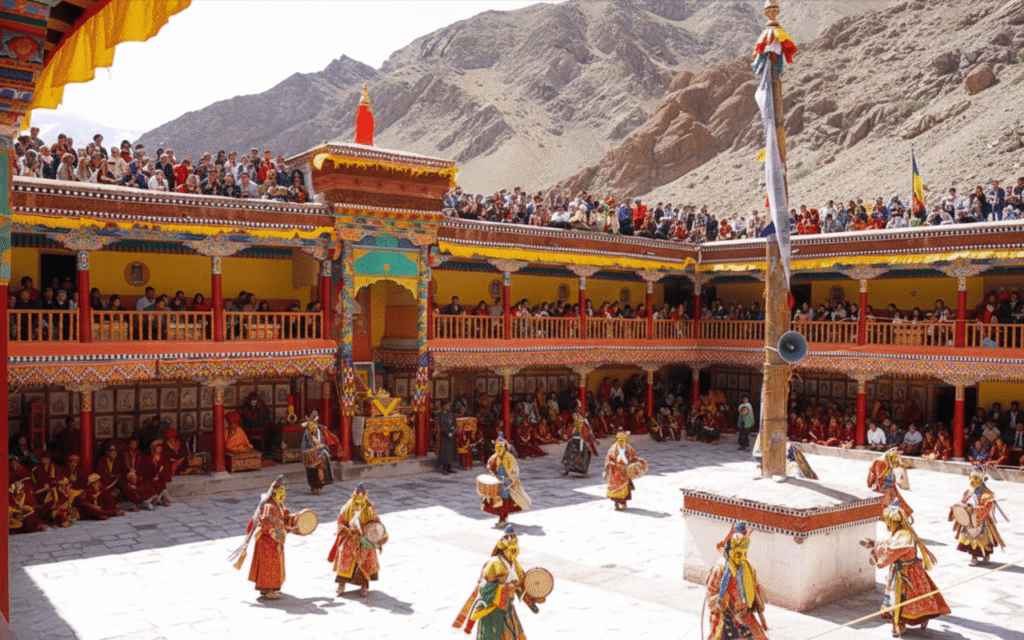
The Shachukul Kabgyat Festival is a traditional monastery festival of Ladakh, celebrated at Shachukul Monastery, in a quiet village located east of Leh. The main highlights of the festival are the sacred Cham masked dances performed by monks, depicting protective deities and symbolic stories that aim to ward off negative forces and bring peace and prosperity to the local community, accompanied by ritual music using drums, cymbals, and long horns.
This festival is best suited for travelers seeking offbeat cultural experiences, spiritual explorers, and photographers who prefer intimate settings over large crowds. Visitors should plan transport in advance, dress modestly, respect monastery customs, and avoid disturbing rituals, as facilities in the village are limited. What makes Shachukul Kabgyat special is its local, community-focused atmosphere, offering an authentic glimpse into Ladakh’s lesser-known monastic traditions where festivals are still celebrated primarily for spiritual devotion rather than tourism.
Stongde Gustor Festival
The Stongde Gustor Festival is a significant monastery festival of Ladakh, celebrated at Stongdey Monastery, one of the largest and most historically important monasteries in the remote Zanskar region. Held according to the Tibetan lunar calendar, the festival focuses on ritual purification and spiritual protection, marking a time when monks perform sacred ceremonies to ward off negative forces and ensure harmony for the coming year. The main highlights include elaborate Cham masked dances, where monks dressed as wrathful and peaceful deities enact symbolic battles between good and evil, accompanied by rhythmic drums, cymbals, and long horns that echo through the high-altitude valley.
Stongde Gustor is best suited for experienced travelers, spiritual seekers, and cultural enthusiasts who are willing to venture beyond Leh to witness Ladakh’s traditions in their most untouched form. Visitors should plan carefully due to Zanskar’s isolation, limited accommodation, and variable road conditions, carry essential supplies, dress warmly even during summer months, and observe strict monastery etiquette during rituals. What makes Stongde Gustor truly special is its remote setting and deeply preserved ritual tradition, offering an immersive and powerful experience of Ladakh’s spiritual heritage where ancient Buddhist practices continue largely unchanged by modern tourism.
Phyang Tserup (Phyang Tsedup) Festival
The Phyang Tserup (Phyang Tsedup) Festival is an important monastic festival of Ladakh, celebrated at Phyang Monastery, located about 17 km west of Leh. Observed according to the Tibetan lunar calendar, the festival is dedicated to Guru Padmasambhava (Guru Rinpoche) and is deeply rooted in the Drikung Kagyu lineage of Tibetan Buddhism. The main highlights include vibrant Cham masked dances performed by monks in colorful brocade costumes, ritual music with drums, cymbals, and long horns, and symbolic performances that represent the victory of wisdom over ignorance and the protection of the region from negative forces.
This festival is well suited for spiritual seekers, cultural travelers, and photographers, as it offers an authentic monastery experience without the overwhelming crowds of larger festivals like Hemis Tsechu. Visitors should dress modestly, respect monastery rules, avoid interrupting rituals, and plan transport from Leh in advance. What makes Phyang Tserup special is its balanced blend of spiritual depth and accessibility, allowing visitors to witness centuries-old Buddhist traditions in a serene setting that still feels closely connected to everyday Ladakhi life.
Karsha Gustor
The Karsha Gustor Festival is one of the most significant monastic festivals of Ladakh, celebrated at Karsha Monastery, the largest and most influential monastery in the remote Zanskar region. Observed according to the Tibetan lunar calendar, the festival centers on ritual purification, protection, and the removal of negative forces, with ceremonies intended to safeguard the valley and its people for the year ahead. The main highlights are the powerful Cham masked dances, where monks dressed as wrathful and protective deities perform symbolic movements to enact the triumph of wisdom over ignorance, accompanied by resonant drums, cymbals, and long horns that echo across the mountains.
Karsha Gustor is best suited for experienced travelers, spiritual seekers, and culture enthusiasts who are willing to journey beyond Leh to experience Ladakh’s traditions in a deeply authentic and less commercialized setting. Visitors should plan travel well in advance due to Zanskar’s isolation, limited accommodations, and changing road conditions, dress warmly even during summer, and strictly follow monastery etiquette during rituals. What makes Karsha Gustor truly special is its grandeur, spiritual intensity, and dramatic Himalayan backdrop, offering a rare and immersive glimpse into ancient Buddhist practices that continue to thrive in one of Ladakh’s most secluded and culturally rich regions.

Korzok Gustor Festival
The Korzok Gustor Festival is a distinctive monastery festival of Ladakh, celebrated at Korzok Monastery, near the high-altitude lake Tso Moriri, in the Changthang region. Observed according to the Tibetan lunar calendar, the festival focuses on ritual purification and protection, performed to ward off negative forces and ensure harmony between the land, the monastery, and the nomadic communities living nearby.
The main highlights include sacred Cham masked dances by monks, ritual music with drums and long horns, and traditional prayers attended by the Changpa nomads who travel from distant pastures to participate. Korzok Gustor is ideal for adventurous travelers, cultural explorers, and spiritual seekers who wish to experience Ladakh’s festivals in a rare and remote landscape.
Visitors should prepare for extreme altitude and cold acclimatize properly, carry essential supplies, and respect local customs and fragile ecosystems. What makes Korzok Gustor truly special is its breathtaking setting beside Tso Moriri and its strong connection to nomadic life, offering an unforgettable blend of spiritual ritual, natural beauty, and living Himalayan culture.
Takthok Tsechu Festival
The Takthok Tsechu Festival is a significant monastery festival of Ladakh, celebrated at Takthok Monastery, the only monastery in Ladakh belonging to the Nyingma sect of Tibetan Buddhism. Held according to the Tibetan lunar calendar, the festival is dedicated to Guru Padmasambhava (Guru Rinpoche) and focuses on spiritual purification, protection, and the transmission of sacred teachings.
The main highlights include powerful Cham masked dances performed by monks wearing unique Nyingma-style costumes, ritual music with drums, cymbals, and long horns, and symbolic enactments that represent the victory of wisdom over ignorance.
Takthok Tsechu is ideal for spiritual seekers, cultural travelers, and photographerswho want to experience a festival distinct from those of the Gelug and Drukpa traditions. Visitors should dress modestly, respect monastery rules, avoid interrupting rituals, and plan transport from Leh in advance. What makes Takthok Tsechu truly special is its association with Ladakh’s only Nyingma monastery and its cave-temple setting, offering a rare insight into one of the oldest lineages of Tibetan Buddhism in a dramatic Himalayan landscape.
Sani Naro Nasjal Festival
The Sani Naro Nasjal Festival is one of the oldest and most unique monastery festivals of Ladakh, celebrated at Sani Monastery, near the banks of the Zanskar River. Held according to the Tibetan lunar calendar, the festival is deeply rooted in ancient pre-Buddhist and Buddhist traditions and is dedicated to spiritual purification, protection, and the well-being of the local community.
The main highlights include rare ritual ceremonies, sacred prayers, and symbolic performances that differ from typical cham-dance-focused festivals, reflecting Sani Monastery’s status as one of the earliest religious sites in the region. Sani Naro Nasjal is best suited for experienced travelers, spiritual seekers, and cultural enthusiasts who wish to explore Ladakh’s lesser-known traditions in a quiet, authentic setting.
Visitors should plan carefully due to Zanskar’s remoteness, respect local customs, dress modestly, and observe rituals silently without disruption. What makes Sani Naro Nasjal truly special is its ancient origin and distinctive ritual character, offering a rare glimpse into the early spiritual history of Ladakh where traditions have been preserved for centuries in near isolation.

Ladakh Festival – A Living Showcase of the Region
Unlike monastery-based religious festivals, the Ladakh Festival is a region-wide cultural celebration that brings together the many faces of Ladakh in one vibrant event. Held annually in September, mainly in Leh, this festival was created to preserve and present Ladakh’s traditional lifestyle at a time when modern influences are rapidly increasing.
During the festival, Leh transforms into an open cultural arena. Villagers arrive in elaborate traditional costumes, musicians perform age-old folk songs, dancers reenact stories of harvest, war, and devotion, and sports like polo and archery highlight Ladakh’s warrior heritage. Handicraft stalls display local wool products, jewelry, and woodwork, while food counters introduce visitors to authentic Ladakhi cuisine.
What makes the Ladakh Festival especially appealing is its accessibility. You don’t need to visit remote monasteries or follow complex rituals to enjoy it. Families, first-time visitors, and photographers can easily engage, observe, and participate without fear of disturbing religious practices. Events are usually spread across Leh town, making logistics simple.
For travelers, this festival acts as a cultural crash course—offering a broad understanding of Ladakh’s people, art, and traditions in just a few days. It stands out not for spiritual intensity, but for its role in cultural preservation, pride, and community identity, making it one of the most visitor-friendly festivals in Ladakh.
ghlights include colorful folk dances and music, traditional costume parades, polo matches, archery demonstrations, handicraft exhibitions, local food stalls, and cultural programs held at places like Leh Market and open grounds. This festival is ideal for first-time visitors, families, and culture enthusiasts, as it offers a comprehensive introduction to Ladakhi traditions in an accessible and celebratory setting.
Visitors should plan accommodation in advance due to high tourist demand, respect local customs during performances, and stay hydrated while attending outdoor events at high altitude. What makes the Ladakh Festival truly special is its all-in-one cultural experience, allowing travelers to witness Ladakh’s music, dance, sports, crafts, and way of life in a single, lively celebration that bridges tradition and modern tourism.
Diskit Gustor
High above the Nubra Valley, the Diskit Gustor unfolds each year at Diskit Monastery, turning this quiet Himalayan landscape into a powerful stage for spiritual renewal. Unlike festivals that feel celebratory from the first moment, Diskit Gustor carries a serious, protective tone, its purpose is not entertainment, but the cleansing of negative forces and the safeguarding of the valley for the year ahead in Ladakh.
The heart of the festival lies in its ritual precision. Monks perform intense Cham dances, embodying wrathful deities whose movements are meant to subdue harmful energies believed to affect people, crops, and livestock. The ceremonies build slowly, culminating in the dramatic destruction of a symbolic effigy, an act that represents the elimination of evil and accumulated misfortune. For locals, this moment marks a spiritual reset.
Diskit Gustor is especially meaningful for travelers who venture beyond Leh into Nubra Valley. The crowd is largely local, the setting stark and dramatic, and the atmosphere deeply reverent. There are no grand stages or announcements, only ritual, silence, and belief. Visitors should be prepared for cold winds, strong sun at altitude, and limited facilities, while maintaining strict respect for monastery customs.
What truly sets Diskit Gustor apart is its sense of purpose. Set against vast sand dunes and snow-capped peaks, the festival feels less like something you watch and more like something you witness, a reminder that in Ladakh, festivals still exist primarily to protect life, land, and spirit, not to impress an audience.
Thiksey Gustor
Perched dramatically on a hill overlooking the Indus Valley, Thiksey Gustor is one of the most visually striking monastery festivals in Ladakh, held at Thiksey Monastery. Celebrated in late autumn, as Ladakh prepares to withdraw into winter, this festival carries a strong theme of cleansing and closure, a final spiritual purification before the harsh season sets in across Ladakh.
Spread over two days, Thiksey Gustor unfolds with a slow, deliberate intensity. Monks perform elaborate Cham dances in the monastery courtyard, wearing towering masks and richly embroidered robes that represent guardian deities and cosmic forces. The atmosphere is solemn rather than festive, with rhythmic drums and long horns echoing across the valley. The most powerful moment comes at the end, when a ritual effigy is set on fire, symbolizing the destruction of evil, ignorance, and obstacles carried through the year.
Unlike larger festivals such as Hemis Tsechu, Thiksey Gustor remains deeply monastic in character. Locals attend quietly, offerings are made without spectacle, and visitors are expected to observe rather than participate. Because the monastery is easily accessible from Leh, it is ideal for travelers who want to experience an authentic ritual without traveling far, yet still witness a festival of great spiritual weight.
What makes Thiksey Gustor special is its timing and atmosphere, set against cold winds, clear skies, and golden autumn light, it feels like a ceremonial turning of the page. It is not about celebration, but about letting go, making it one of Ladakh’s most powerful and introspective festivals.
Chemrey Wangchok
Far from the busy streets of Leh, the Chemrey Wangchok Festival takes place at Chemrey Monastery, a hilltop monastery surrounded by wide valleys and constant Himalayan winds. This festival feels unhurried and intimate, reflecting the slower rhythm of village life in Ladakh, where ceremonies are still meant first for spiritual balance, not for an audience.
The festival centers around Cham dances performed by monks in heavy brocade costumes and expressive masks. Each dance tells a symbolic story of protection, compassion, and the subduing of negative forces, while drums, cymbals, and long horns set a steady, meditative pace. There is no rush here; movements are deliberate, and silence between rituals carries as much meaning as the dances themselves.
Chemrey Wangchok is particularly rewarding for travelers who enjoy less-crowded cultural experiences. The audience is mostly local villagers, monks, and a handful of visitors who have made the effort to reach this quieter corner of Ladakh. Facilities are limited, and the focus remains entirely on the rituals, which gives the festival a rare sense of authenticity.
What makes Chemrey Wangchok special is its calm dignity. Without dramatic finales or large crowds, the festival offers something subtler a chance to observe Ladakhi Buddhism as it is practiced for the community itself, shaped by wind, space, and centuries of continuity rather than performance or spectacle.
Galdan Namchot
As winter tightens its grip on the Himalayas, Galdan Namchot arrives quietly across Ladakh, transforming monasteries, homes, and villages into fields of soft, flickering light. Rather than loud ceremonies or public gatherings, this festival is marked by illumination and stillness, commemorating the birth and enlightenment of Je Tsongkhapa, the founder of the Gelug school of Tibetan Buddhism.
On this day, rooftops, monastery walls, and window ledges are lined with butter lamps and candles, glowing against the darkness of early winter nights. Monks chant prayers inside temples, while families light lamps at home as an offering for wisdom, compassion, and clarity. There are no masked dances or dramatic rituals—Galdan Namchot is inward-looking, meditative, and deeply personal.
For travelers, the experience is subtle but powerful. Walking through Leh or nearby villages in the evening, you’ll see monasteries shimmering in the cold air, prayer flags barely moving, and the quiet hum of mantras in the background. Warm clothing is essential, as temperatures drop sharply after sunset, and respectful silence is expected around religious spaces.
What makes Galdan Namchot special is its gentle spirituality. In a land known for dramatic landscapes and intense festivals, this day reminds visitors that Ladakhi Buddhism is equally about stillness, light, and inner clarity, making it one of the most peaceful and reflective observances in Ladakh.

Ladakhi Losar (New Year)
Ladakhi Losar, the traditional New Year of Ladakh, is less about public spectacle and more about home, family, and fresh beginnings. Celebrated in the heart of winter (usually December or January), Losar marks the end of the old agricultural year and the spiritual clearing of everything that no longer serves the household or community.
In the days leading up to Losar, homes are thoroughly cleaned, old utensils are discarded, and special offerings are prepared to symbolically remove bad luck and lingering negativity. The first day is traditionally quieter and introspective, while the following days bring visits to monasteries, exchanges of greetings, and gatherings with relatives and neighbors. Families prepare festive dishes like guthuk and butter tea, and prayer flags may be renewed to welcome auspicious energy into the New Year.
For visitors, Losar offers a rare window into Ladakhi domestic life rather than monastery courtyards. There are fewer public rituals, but a deeper sense of warmth despite the freezing temperatures. Travelers should expect limited tourist activity, dress for extreme cold, and observe respectfully, especially when invited into local homes.
What makes Ladakhi Losar special is its human scale. While many Ladakh festivals are about cosmic battles between good and evil, Losar is about something simpler and more universal: letting go, starting fresh, and stepping into the new year with gratitude, prayer, and quiet optimism.